From waste to value:
advanced PV panel recycling technology
Recover ultra‑pure glass, silicon and silver from end‑of‑life solar panels and maximize your economic return.
Redefining the standard for
PV panel recycling
Material quality over volume
- Ultra‑pure recovery of Silver and Silicon
- Reusable glass instead of downcycled material
Non-destructive process
- Advanced waterjet delamination
- Preserves material integrity and value
Designed for real circularity
- Compliance with current and future regulation
- Enables reuse, not just waste processing
Highest economic recovery
- Maximizing ROI through material purity
Our solutions
Modular solutions for
high-value PV recycling
From single machines to complete turnkey recycling lines.
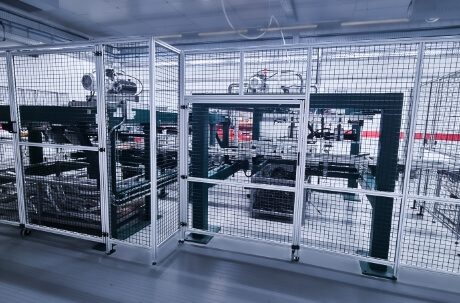
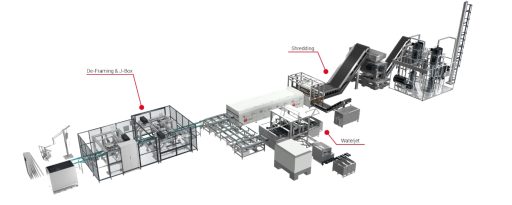
J-Box & de-framing equipment
- 60 PPH – 1,5 TON/H
- Single and triple J-boxes
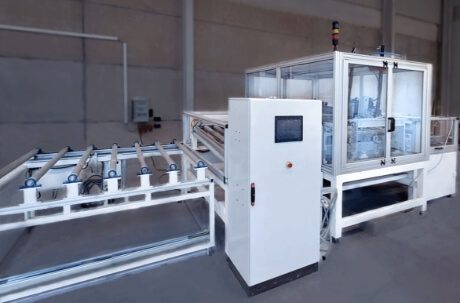
Waterjet equipment
- 60 PPH – 1,5 TON/H
- Clean glass in one piece
- Highest purity levels
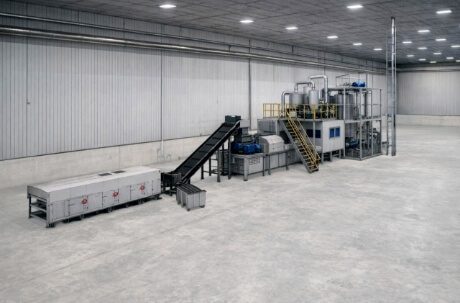
Shredding line
- 50 PPH – 1,25 TON/H
- Treatment for lower value panels
Optional Equipment
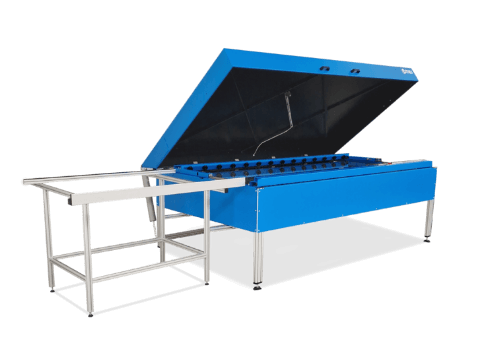
Second life unit
- El imaging
- Sun simulator
- Hi-pot
Tell us about your
panel recycling challenge
Select the solution you are interested in and briefly describe your project.
Our specialists will get back to you.
How we do it
Engineering recycling solutions that really work
We don’t adapt generic recycling equipment. We engineer PV recycling solutions based on material value, process integrity and long-term performance.

Understand your material & business model
- Analysis of panel types, volumes and target materials
- Focus on economic value, not just throughput

Define the right recycling route
- Selection of non-destructive processes
- Priority on purity and material reuse

Engineer & integrate the solution
- Modular design: standalone machines or full lines
- Seamless integration into existing plants

Commissioning & long-term support
- Start-up, optimization and remote support
- Designed for scalability and future regulations
FAQs
What do you get with a
Mondragon Assembly solution?
Why is shredding alone not enough for recycling solar panels?
Shredding reduces the size of the panel, but it limits the purity of the recovered materials and, therefore, their economic value. Traditional shredding technologies are no longer sufficient when the goal is to recover real value, as they reduce purity, lower useful recovery rates, and impact profitability. With waterjet, however, separation is more selective, allowing high-value materials such as glass, silicon, and silver to be preserved.
What value does waterjet add to a plant that already has a shredding line?
It adds the part that generates the most value: the economic recovery of higher-quality materials. Incorporating a waterjet machine into an existing shredding process improves the ROI of the line, as the added value lies in the waterjet process, which maximizes economic recovery through higher-purity raw materials.
What materials are recovered with the waterjet process?
The waterjet process enables the recovery of clean glass and separates the remaining fraction into plastics, copper, and a much cleaner silicon and silver powder fraction than what is obtained through shredding. This is one of its key differentiators: not only the panels are recycled, but raw materials are recovered with higher quality for better revalorization.
What is the main difference between waterjet and shredding?
The main difference is that waterjet does not mix or degrade materials in the same way as shredding. Its selective layer-by-layer separation results in less damage to silicon and reduced cross-contamination between materials. The silicon and silver powder obtained is much cleaner than in shredding processes, where it typically carries more plastic and glass residues.
Does waterjet completely replace shredding?
Not necessarily: waterjet complements shredding. Unbroken panels can go through waterjet to economically recover glass, silicon, and silver, while others (such as broken panels or double-glass modules) are processed through other routes, including shredding. Both can be combined within a global solution.
What types of panels can be processed with waterjet?
The waterjet process can handle all types of crystalline silicon (c-Si) glass-backsheet (monofacial) photovoltaic modules that do not have broken glass (to ensure the purest recovery of silicon and silver), including different cell technologies such as Al-BSF, PERC, TOPCon, and HJT.
Can the waterjet machine be integrated into an existing plant?
Yes. It can be designed as a standalone machine or as part of a complete line, with integration into existing plants. When the flow of panels that meet the conditions for waterjet processing is sufficient, incorporating a waterjet machine is more profitable than sending those panels to shredding.
What happens to broken panels or modules not suitable for waterjet?
Broken panels or those not suitable for waterjet must be recycled through other routes, with shredding currently being the most common solution (even though it reduces the value of recovered raw materials).
Is the waterjet process designed to meet regulations or to maximize value?
Both, but it is primarily designed with the value of recovered materials and process integrity in mind, not just to meet minimum recycling targets (although it does that as well).
What is the processing capacity of the line?
The line capacity is 60 panels per hour, with individual machines having different throughput: 60 panels for the de-framing, 60 panels for the waterjet and 50 panels for the shredding. This may vary depending on panel size).
Is it a clean process? Does it consume a lot of water?
Yes. It is. Waterjet is a clean process that does not require ovens or chemical reagents and operates with high-pressure water in a closed loop, recovering approximately 97% of the water after filtering residues (water loss is due to evaporation). Annual water consumption is approximately 270 m³.
What does Mondragon Assembly offer beyond the machine?
Mondragon Assembly provides a complete solution: process engineering, plant integration, commissioning, optimization, and support, as well as sales, warranty, and maintenance of the full line.
Contact Contact Contact
Contact Contact Contact
Contact Contact Contact